(to read the previous entries of the What Seeking Infinite Jest Means series, click here for Part 1, here for Part 2, here for Part 3, and here for Part 4)
Blue
“Come on in…doctor”
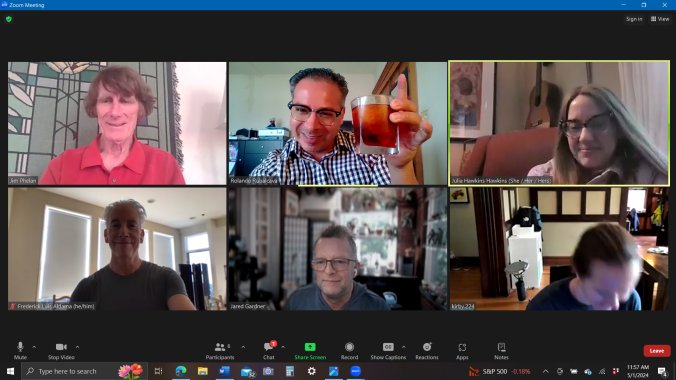
And just like that, three years of writing, six years after starting my PhD program, over another ten years when I decided I wanted to be a writer, I hear the words all freshly minted PhD students await to hear. I officially completed my PhD program. One career change, an unquantifiable dream, a string of sleepless nights, thousands of miles traveled, surmounting countless steps on a ladder towards this goal, and three time zones later, I accomplished something I genuinely thought was impossible. My advisors bathe me in praise. I swim in it, gracefully. This must be how dolphins feel swimming in their pods. This finish line I thought I’d never reach was now behind me. I officially obtained infinite jest. As I personally thank each of my advisors, I dedicate to each of them an ingredient that makes the perfect Negroni- gin, sweet vermouth, Campari, and a slice of orange. I may possibly be the first person to mix a cocktail during a dissertation defense. Its herbal notes and smooth texture are the well-earned award to six-year long journey. Like my program, like the dissertation revising process, like the years it took just to apply, my defense soon came to an end. Once my advisors left the Zoom meeting, I closed my laptop, ready to engage with life after the PhD.
And then…silence.
I had no idea what I was going to feel when I crossed this benchmark of my career. I was under the impression that the world soon arrives at world peace, or that doves would be flying over my apartment as this once-believed impossible goal was now accomplished. Instead, there was just…kinda nothing. There was no more chasing. No more reaching. All of life was in my grasp, and it felt like…nothing. A vast quiet engulfed me, stretching into the deepest depths of my soul. I didn’t know how to respond to this once I was in this quiet. I didn’t so much enter this new phase, but was more liked shoved into it. I could feel the questions I’ve been conveniently ignoring trying to breach the gates of my attention. What will you do after you complete your degree? Where will you work? Will you stay in Ohio? Are you finally going to get married and settle down? How long can you float by without a job? I didn’t know the answers to any of these questions. Feeling so engulfed was soon becoming exhausting. I wanted to lie down on my couch, at the same spot where I was waiting to hear before my committee called me back. Maybe it was the alcohol, or the crushing reality that my doctoral program was over, but I soon fell to my side to take a nap. I couldn’t remember the last time I took a nap. My routine was so rigid and coordinated, that there was no room for naps. Now that the rigidity has been smoothed away, I could afford to rest my eyes, allowing this quiet to sweep me into a deep sleep…
BZZZ BZZZ
My phone wakes me up. One of my friends invites me to join the protests on campus against Israel’s occupation of Palestine. This is when the bubble of my academic career popped, with the world’s events reminded me where I was needed.

Campus Protests for Palestine
This issue was one I held dear in my heart. Growing up, ideas like colonialism and apartheid were words that existed in history books. Yet, after learning about what is happening in Palestine and reading about it from some of the most brilliant and progressive minds, I knew I needed to protest against their occupation. I couldn’t remain inactive in the world as people are colonized. There were rallies, drum circles, attorneys ready to help, food being passed around, as well as police surrounding most protest circles. This was not long after the wave of protests happening all over the country on college campuses. I knew I had to be a part of this, risking what I earned just hours ago. We sang, chanted, held our fists in the air. After several hours, the circle began to die down, and my friends signaled to head out. We walked away, on our way to dinner and drinks to celebrate passing my defense. We talked and laughed all night about nothing, under dim lights with a round of cocktails in front of us. It was a long, eventful day, that soon came to an end, just like my doctoral program.
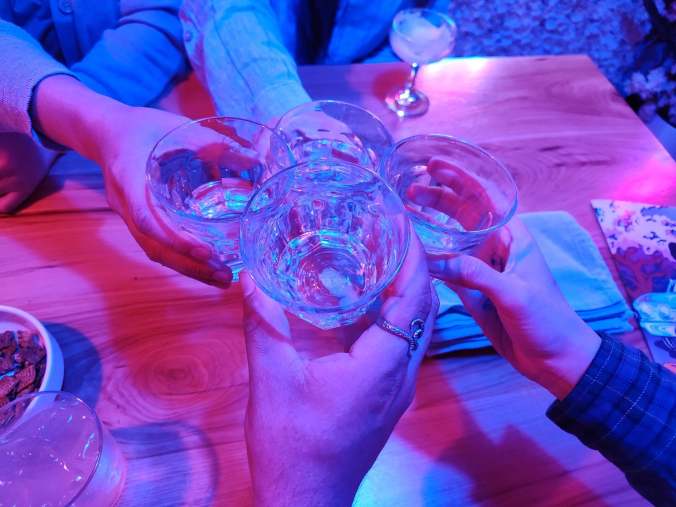
Defense Drinks
I remember fantasizing what this day would look like. The secrets of the universe unlocking themselves to me, giving me access to all knowledge. Job recruiters fighting for my attention. Every issue that was at one point a barrier to success melting away. Instead, my post-PhD life was shaping into an experience filled with contradictions. Whenever I would experience a moment of quietude, I would hear two voices in competition,
Hiking in Griffith Park
whispering, “You know everything” and “You know nothing”. There’s a nothingness you feel when you accomplish something years in the making. No assignment to finish. No deadline to worry about. Nothing distilled itself into erratic moments, my glass overflowing with nothingness. I wanted to relish the time I had by doing all the things I never had time for. I spent the next two months letting nothingness dictate my time. I took a brief trip back home, celebrating with family and friends. Within this pocket of time, I felt untouched by stress. I went hiking in Griffith Park. One of my friends treated me to a Two-Michelin star restaurant. I cooked for my parents, something considered sacrilege growing up. I accomplished something twenty-something Rolando could only imagine. When I looked in the mirror, I could feel his eyes looking back at me, giving me a nod of approval. Like all good things, this moment had a very specific shelf-life. I got my final stipend from OSU, and soon, all of the years of hard
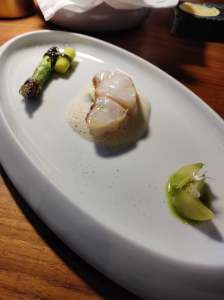
Course from Providence, a two-Michelin Star restaurant in LA
work, gaining knowledge, attempting to master something, were compressed into an instant. My new life snapped me awake to my new situation. I don’t have a job and I don’t know what I want. And I really needed a job. This is what the unknown feels like when you grow up working-class. Not a romantic flow of time that grants you immortality, but a grasp of your whole body reminding you that you need gainful employment. I climbed Mount Everest, and climbed back down, scruffy, lighter than before, (almost) unscathed. The next question I had to figure out was, What do you do after climbing Mount Everest?
My commencement ceremony took place in August. It was one of the few days that summer where I allowed myself to not worry about anything. My parents came for my commencement, coming to Ohio for the first time. I got to show them my campus, along with visiting The Thompson. My parents spent years convincing me that they were proud of me, and my internalized Catholic guilt prevented me from believing them. When they walked through The Thompson, you could see all the years of support and apoyo shining on their faces. The rows of books and multiple stories inside gave my parents a sense of awe, the same kind I had when I visited The Thompson for the first time. We then spent a couple of hours at my apartment on my patio. Something about seeing my mom swing on my porch swing and my dad rhapsodizing about the brick-paved streets made me feel like I no longer needed to prove to them that my time here was
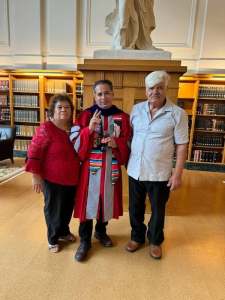
My parents and I at The Thompson
worth it. Just seeing them here was a full circle moment. We went to dinner at one of my favorite Columbus restaurants, then called it a night, driving back to their AirBnB. I was speechless that day. So much work encapsulated in one evening, feeling like I could finally share a secret with my family. I let my brain continue remain worry-less, listening to Ludovico Eunidi as the night came to a close. The next morning, I met up with them for breakfast before their flight. As my brother began to request an Uber to the airport, my dad shared something with me. I knew it was serious because he put his glasses on and looked right at me. My dad, spectacled, tells me, “We have a family friend that just started a pool cleaning business. What do you think about moving back home, working with this guy, and making some money while you’re applying to other jobs?” I switched back on the part of my brain designated for worrying. I had no interest spending days cleaning pools while working on my application materials for tenure-track jobs. But I also had no job prospects now. What are my options? I visualized going back home, spending days doing work under the California sun, and coming home and writing from my parent’s garage. Then I thought about the days where I was worked to the bone on my studies, teaching, working as an Editor for a magazine, running a workshop series, and volunteering at a hospital. It was just as exhausting, but that exhaustion was on my terms. And I thought about my studies. I chose something so esoteric, so specialized, wanting to help people with this specialty. Taking this opportunity would feel like throwing it all away for day job. I decided to take a risk on myself instead. I told my dad, “I’m here to find a job. I think being here is what I need right now”. He looked more disappointed for his friend than proud of me, but that little glint in his glasses said that he believed me and felt that I’ll be okay here. It was my turn to make the most out of this risk.
I wanted to be purposeful in my job search. My new degree made me feel invincible. After years of working as a part-time instructor, I knew I needed to set boundaries and not settle. I began aiming my efforts towards the medical sector. After studying a field like Medical Humanities, I wanted a job that allowed me to see my studies in practice. And after years of teaching as an adjunct instructor, I knew I wanted something that will provide a livelihood that did not demand working several jobs on top of that. I wanted a job in my field, full-time, with health insurance and a retirement plan. I genuinely felt this was not unreasonable to ask. That boundary lasted for about a week. I applied to five or ten jobs a day, scouring job postings, constantly rationalizing my fit for the job. My routine, once running like a fine-tuned engine, was now a mess of hours trying to find work, going on walks, and the occasional doomscroll. I spent hours online combing job posts while updating my resume. My program made me feel so independent, but now that there were no more classes to take or papers to write, there was no ground to walk on anymore. No straight line to follow. Everything was up to me now. It felt strange feeling like this after completing a PhD program, when in reality, that’s just what life is. We are just trying to figure out the next step. But my program didn’t just give me direction. It encapsulated my life. My social circle were all grad students. My hangout spots were made for OSU students. With every day that passed, the many connections I had to OSU were getting snipped one by one, becoming more and more free to be on my own. Freedom felt awful. Every day ended with me muttering to myself, be patient, work hard, be kind to others, and something will turn up. With each passing day and with every application rejection, this was beginning to feel less and less true.
I haven’t had to apply for a job in the over ten years between completing my program and the job I had before moving to Ohio. What job do I want? Am I staying in Ohio or moving back to California? How long can I go with no income? These questions collectively turned into an inescapable vice. You are forced to confront these questions, no matter how much you believe you don’t have to. I would wake up feeling helpless as my day consisted of searching jobs on LinkedIn. I was soon forced to ask, “What can I do now?” while learning that asking “What job do I want?” is a privilege for a lot of people. One morning, I woke up and answered a question I had to ask: what is my life right now? The answer was pretty simple: I was broke, single, unemployed, stuck in a lease for my apartment for the next eight months, and the academic job market is in shambles. It was so tempting to dedicate the rest of the day bed-rotting, scrolling through YouTube while pretending my problems did not exist. Maybe this was why fainting couches existed? But I didn’t have time to faint. I needed a job. Today.
One morning, about a month into my job search, I started to get really lethargic. I felt like I was okay with letting the gravity of my situation crush me further into my bed. If I have no reason to get out of bed, why leave? As my brain was trying really hard to come up with an argument against this, my soul reminded me why I wanted to pursue this degree in the first place. I wanted this degree to provide the needed toolkit to help humanity. I wanted to change the world. I wanted to help people. I wanted to be part of the effort that rights the wrongs I had to endure so future generations won’t. My brain soon realized, I can’t do that if I’m in bed. I got up, printed out several copies of my resume, ready to pound the pavement. I needed to find a job, and the last time I was in a situation like this, I drove around for hours looking for the nearest Now Hiring sign. This time, I went to every bar I could think of that may be hiring. I knew I wasn’t going to find the job I dreamed of. I just needed the job that will help me get there. I walked into a few places, some politely letting me know they weren’t hiring, others told me they’d keep my resume on file. One place told they’d keep in touch, only to hear my resume being crumpled up as I was walking out. I went to one place that I actually liked. Cobra- a small Asian-fusion cocktail bar. As someone who’s worked in bars during my undergrad years, I really liked the vibe they put out. It was progressive but not pretentious, welcoming and inclusive, and I loved their small plates. One handshake, an interview, and a few emails later, I had a job! I was ecstatic. I finally had something solid after floundering for so long. This was going to be a good step for me….right?

Cobra cocktail bar
When I got the job, I thought about all of the things that would make me enjoy it. I love cooking, working behind a bar, hospitality, telling my friends to stop by during my shifts, tip money. I thought about the camaraderie you feel after closing up the bar while everyone shares a shift drink. The late-night diner visits after shifts that didn’t leave time for eating. The drive home under Los Angeles streetlights that guide you to slumber. I ended up really liking my coworkers, and it was interesting to learn from the owners about their business philosophy. I learned how to carry multiple plates in one hand and the craft that went behind the drinks I enjoyed before I started working here. I got good at all of these after a little over two weeks of working there. After that, I realized…that I needed to leave as soon as possible. All of the things I enjoyed back in my undergrad days were because I did it as a side gig while going to school. This job was soon going to be my full-time job. This meant all of my effort was going to be aimed at doing this well. My life was soon put into perspective. I’m glad I got a job to pay my bills, but I have an arsenal of knowledge ready and aimed at the world’s problems. This job will not put me in a position to fix those problems. The job ended up becoming what I needed it to be- something to do for income while I search for my next step. I liked the place and was grateful, but this could not be the next phase of post-PhD life. Soon, my strategy was turning my brain off during work. This was something I didn’t like doing and soon started to resent. What’s the point of going to school if you have to turn your brain off to do well? I mopped floors, bussed tables, all with a smile, masking the muttering I was doing under my breath. Something needed to change.
Turning my brain off at work soon became my strategy. My commute was comprised of reflections and asking big questions during my bus ride to the bar. Is this what post-PhD life is? Just wondering how you can apply your degree? I knew I wanted to help people, and I wanted to do it in a way that spoke to my studies. Medical Humanities has this cool way of finding its own ways of showing up when you help others. I liked tapping into my ability to empathize with others, listening closely, being the listener people need me to be. But where do I find a job like that? Who will hire someone if their goal is to transform a whole industry? I lean my head against the window on my way to work, looking up at the buildings in downtown Columbus. I never realized how tall the buildings were.
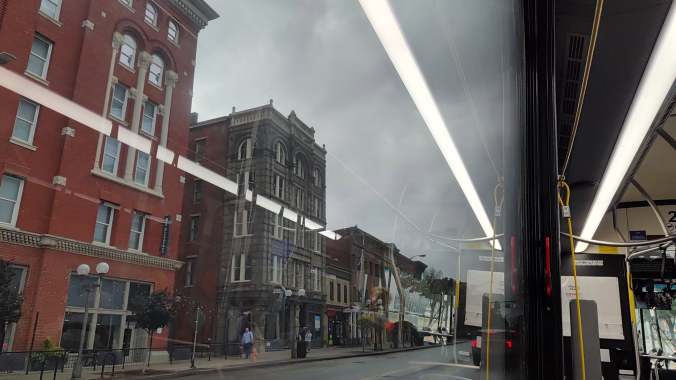
Downtown Columbus
The nice part about working at a bar was the hours. My mornings were fairly open, giving me a chance to continue my job search and give me time in the morning to do whatever I wanted. I kept applying, kept working on my application materials, went for the occasional job, waiting for the epiphany I needed to help figure out my next step. Reading was also something I enjoyed, a practice I got really good at during my program. One of the books I was looking forward to moving from my to-be-read list was Hwang Boreum’s Welcome to the Hynum-Dong Bookstore. Several of my friends recommended it, and I never heard of this author. Going back to my Murakami days, one thing that always helped my brain was reading a book that had nothing to do with my studies, helping me disassociate before working while also taking my brain to the gym. This new author’s writing style was okay (fun and charming, but a little too simple, with not a lot of ambiguity), but what made the book so good was how well it talked about work. It’s a story about a woman whose life implodes and soon decides to pursue a lifelong goal- opening a bookstore. She writes about the dignity and honor of waking up in the morning and doing good work, contrasted by another character, a college grad who spent years in a career he hated, choosing to then work as a barista at the bookstore. I soon had one of those experiences where the book correlates with your life. It wasn’t just about a woman and a bookstore, but a serious analysis of a changing world, where the stories we were told about going to college and living a good life feels more like a myth than reality. We never get to stop and ask ourselves what we want or what is it we want to aspire to. I was at a coffee shop reading this book, when I came across a part where Yeongju, the owner, decides to start a reading club in her store. They read The Refusal to Work: The Theory and Practice of Resistance to Work, by David Frayne (that’s a real book, by the way). Each participant in the book club felt like a voice I’ve heard as I navigated life as a working adult. Some agreed with how vapid life felt following a prescribed plan to a good career, only to be shortchanged; others actively joined its resistance, not succumbing to the pressures of the job market; one character bluntly shared his thoughts, saying that even if he can see the futility of the job market, he still thinks you’re a loser if you don’t have a job. I’m reading this while trying to figure out if my new degree was even worth it if I’m not applying it. Of course it was worth it! But why doesn’t it feel that way? I looked forward to finishing the book, rooting for the success of a bookstore and hoping their success can translate into some kind of direction for me. I went to pay my tab at the coffee shop, until my debit card was declined. I couldn’t afford to hope anymore.
(Sidenote: I actually wrote about my bartending days in a previous post, so not diving too deep into this part of post-PhD life. Check out that post out here)
I began to envision what my future will look like. Working nights while applying to conferences and submitting to academic journals during the day. If I was in my early twenties, it sounds like the life of an academic rockstar. Now, I would come home at four in the morning, only to wake up still on edge from the shift before. My tips barely paid my bills, while everything I learned during my program slowly leaked out of my ears to make space for making the Espresso Martini mix. It was becoming more and more challenging just to show up to work. And then…I got a phone call.
I got a job offer….from The James! This was a miracle in the form of a job. My goal was to pursue something that put Medical Humanities into practice. A hospital was exactly where I needed to be. And The James could not be a better place. I remember the days when I volunteered there, meeting so many people who wanted to help others and create an environment of compassion and healing. It took months to get this phone call. While I was looking for work, I applied to every position that sounded remotely related to my strengths. Patient Navigator (I had no idea what that was), Art Coordinator (I would LOVE to be an Art Coordinator, even if I had zero experience in curating), Donor Organizer (for, like, people who donate organs? That could be something!). The job offer was for a position as a Patient Care Associate. I (again) had no idea what that meant, but if this was going to be my foot in the door, I will do that job however long I needed to. Several phone calls and one job interview later, I got the gig! I put my two-weeks notice at the bar, dancing home every time I clocked out. Soon, I was going to start orientation, training, and getting hands-on experience for what I want. This was gonna be a great fit…right?
Pink
Training began, shifting my entire routine. No more late night clock outs. No more waking up at whatever hours planning whatever I wanted. My new routine was as solid as a block of concrete. Show up at 730am for training. Learn everything they teach you. Clock out and do it again tomorrow. In just the span of a week, I could feel my muscles flexing a little differently. I was slowly being molded into what the job needed me to be. The position was actually very much like a nurse’s assistant- I learned how to take vitals, draw blood, read a patient’s medical chart, navigate IHIS. I soon started to realize that the job was for people who aspired to be nurses, working while they completed their nursing program. I was in a different boat. I actually had a completely map to navigate. I wanted to be a part of this scene, and if it meant taking a job in a position that did not require my degree, I was okay with that. I was soon wearing scrubs, badging in to work, and getting acquainted with working in clinical settings. In my last job, my goal was putting the “tend” in “bartender”. Now, I had to learn how to put the “tend” in “hospital”. My training period included working under another PCA,
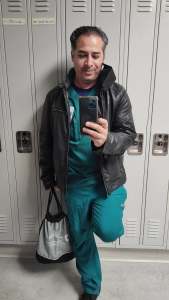
first day mirror selfie
determining if I can do the job on my own. The night before my shift, after a long Nightwalk and thinking about all of the books I read, the true meaning of getting this job finally clicked into place- if Medical Humanities is a real thing and not something that solely exists in textbooks, this job will reveal it to me. I had no idea what to expect. It felt glorious.
My first shift required me to clock in at 7am. I learned a long time ago that on time means early. I’m on my way to work at six in the morning, walking in forty degree weather. Cars buzzed and zipped around the hospital in millions of directions. It felt like Times Square. What are the odds I get hit by car on my way to my first shift? With my luck, they’re not terrible, but with my health benefits still not active yet, maybe I shouldn’t hope for that. I walked inside, thankfully, in one piece. I felt every action, every gesture, every feeling, but I could not describe the events that took place that first day. I didn’t have the vocabulary to recount that experience. I remember a constant buzzing in the air. My coworker showed me how to log in to the phone you are assigned every shift, a metaphorical, but also kinda literal, lifeline to working in a hospital. Nurses shouted acronyms at me that I had no idea what they stood for. The same phrase was told to me multiple times that day: “Breathe. You got this”, becoming my new mantra during this phase. My shift was over before I could grasp anything I learned. When I clocked out, it felt good. Not like a “Glad this is over” kind of way. More like, “You didn’t cause any horrible accidents. You’re gonna be fine”, kind of way. So much was jumbled in my brain. But I haven’t felt that feeling of being in a place you belong since graduating. I liked that feeling, enough to keep going.
(Editor’s Note: as much as our head writer enjoys taking pictures, due to HIPAA laws, there will be a noticeable lack of pictures for the remainder of this post. Another thing you learn working at a hospital is that patient information is everywhere, which means taking pictures needs to be done thoughtfully and can lead to legal actions if they reveal anything they shouldn’t. We hope you enjoy the rest of the post. Our head writer has agreed to write as visually as possible)
My second shift, I remember clearly. It’s easy to remember because it was most likely the most consequential shift during my time here. I clocked in, expecting to work a shift very much like yesterday’s shift. It was not. The day started with my charge nurse (I’m slowly learning the language here) telling me someone called out sick, which meant my patient load went from eight to twelve. I had no time to wonder if I can actually handle that patient or even keep up with what I needed. The saving grace was team of PCAs that float from floor to floor assigned to help where needed. They helped get work done while teaching me how to manage a twelve-patient workload. I started to see my unit as one grid, identifying what each unit needs and when, all while in full contact with the nursing staff. Work felt less like following orders and more like whack-a-mole. I had to do as much as possible, as quickly as possible, proving to my team, my patients, and myself, that I can actually do the job. I was flying up and down the halls, checking blood sugar levels, getting snacks for patients, clearing food trays, and doing whatever nurses need me to do. If yesterday’s shift was a constant buzzing, this shift was a blur. I was the blur that day, moving so quickly while hoping I don’t make any mistakes. My shift slows down at around 5:45pm, with a little over an hour left in my shift. As soon as I sit down, for what felt like the first time all day, one my of my coworkers tells me about a patient who got some pretty devastating news. That patient I spent the last week working with and getting to know. She said everyone felt so bad for her. I wanted to shake her to tell me what happened. According to coworker, this patient, a late-twenties woman, was told that she was pregnant, but due to her chemo treatment, she ended up having a miscarriage. My brain soon experienced what it was like when an unstoppable force meets an immovable object. The speed I was moving at came to screeching halt, and the weight of the job hit me like a semi-truck. This is when I realized what the job was. I’m working with cancer patients, one of the most vulnerable patient populations, undergoing tragic diagnoses. I told my charge nurse that I needed a quick five, showing her my trembling hands. I took small break in the breakroom. Hearing this news about a patient who seemed fine just moments ago felt crushing. Is this what it is to be a healthcare worker? How do you survive when so many patients get news like this? I’m trying to figure out how to stay in a field like this, wondering if I can even handle it. Then it hits me- the fact that I was able to recognize my feelings and have a chance to process them is what humanizes the
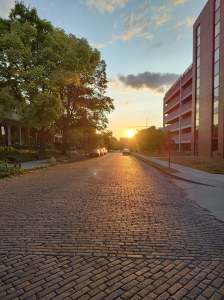
Sunset on the walk home
work. Healthcare workers need pauses like this. I can feel what Medical Humanities taught actually helping me during this time. I compare this to previous jobs, where the best way to process a struggle like this is to bury your feelings, hoping you can ignore them without consequence. Instead, I did exactly what I was supposed to do, all while following protocol. I washed my face and head back to my unit. My coworkers check in on me. I’m hoping to hear words of wisdom. Instead, they offer an encouraging rubbing of my back and remind me what’s left in my shift.
My third shift, which came with a day of rest in between my last shift, was much slower. Instead of a full patient load, I was assigned to be a sitter. That’s when you watch one patient during your whole shift. This happens when a patient has cognitive or behavior issues, or a deemed a suicide risk. My patient was an older man with Alzheimer’s. Things slowed down very much during this shift. I helped the patient stand up, took his vitals, helped him eat by guiding his hands to the food, and getting him anything he asked for. At first, I thought this was going to be a break from a high patient load. It’s not. You are watching someone every second you are sitting. It can be very difficult, depending on the patient. I was terrified something awful could happen at any minute. Shortly after a couple of hours into my sit case, a nurse offered some tips on how to pass the time while still watching my patient. I got my notebook and starting writing. The one thing that can ground you when your world feels like chaos. Lines just kinda poured out. Was this the right move? How do I distill what I learn from this? My medical humanities textbooks didn’t teach me about this. A part of me wishes I can float away to get out of this place. But I’m also here, serving a vital role. This person needs me. My patient needs me. If I float away, who will help him? My disassociated spirit comes back to me. I wasn’t hired by accident. Someone believed in me, and I’m still here, with no one telling me I’m not cut out for it. I walked the patient to the lounge chair next to his bed. He leans his head back, searching for the moon. I begin to envy a life where that is my biggest concern.
After a couple of weeks and getting better acquainted with the job. Things were getting a lot less scary. My journal became my security blanket. I took notes, wrote down observations, started to brainstorm possible research ideas. I was getting a lot more comfortable asking questions. There was a kind of camaraderie here that I really appreciated, but very different. My coworkers were bonded by a fascination with health, as well as a passion for helping others. And it was cool learning everyone’s vibe. There’s the overprotective nurse, demanding updates as politely as possible. There’s the cool-as-a-cucumber nurse, who didn’t look like it but had everything under control. My favorite were the ones who had some of the best and most twisted sense of humor, all while doing an amazing job being there for their patients. I had so much to learn from them. I sometimes just stood in awe watching them work, while staying in my corner, taking notes. I’m usually the one leading the laughs in the room, but here, I didn’t mind solely observing while everyone performed at their best. All of this was a gigantic teaching moment, and I absorbed everything, distilling each shift’s lessons on the walk home. I even began sharing these notes, affectionately calling them, This Week’s Lesson. “Embrace the good days…because it’s so easy to have a bad one”; “I’m now longer a wayward grad student. I am a now healthcare worker”. “I’m smart, I’m strong, I have a good heart. None of that matters if I’m not good at my job”.
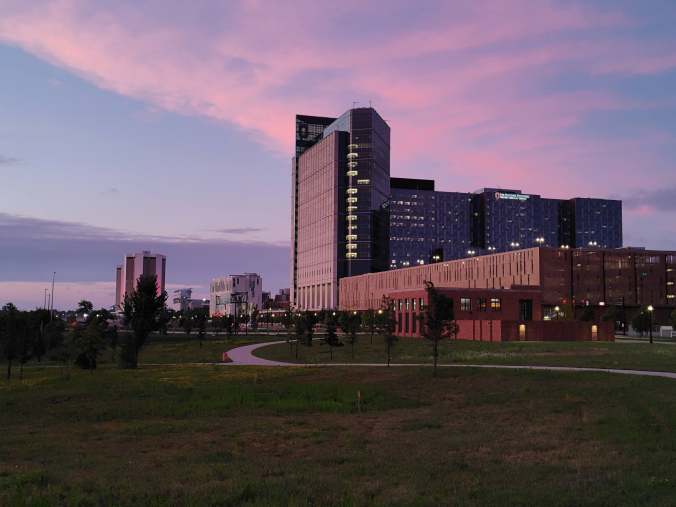
Pic of The James on my day off
Completing the tasks of my job soon started to feel like second nature. I was getting way more comfortable sticking patients and charting. There was this one patient- she was funny. I walked into her room to take her vitals and she-
I NEED HELP IN HERE!!!!
A nurse yelled this out as a patient began to code. All of the nursing staff ran into a room, with another behind them grabbing a crash cart. This was my first ERT (Emergency Rescue Team) moment. One nurse tells me to get EKG leads. I ran into the supply room, only to open the wrong door. Another nurse runs in the right room to grab them and moves inside. I’m frozen in fear and shame. I wanted to act but don’t know how. I can only stand and watch what is happening. A nurse began chest compressions, another starting up the defibrillator. I can barely process what’s happening. His heart rate came back up and everyone took a long sigh. I don’t know if I should ask questions or just let everyone tell me what to do. Before my equilibrium was able to come back, one of my coworkers explains to me what everyone’s role is when this happens, including mine. My manager checked in with me a little later. I’m genuinely spooked. I felt the hairs on the back of my neck standing up. It took me almost a whole twenty-four hours to feel balanced again. I soon write myself another note. “This is what you signed up for. You can either do it or you can’t”. The walk home opens up a lot of questions for me. Is this why healthcare workers burn out? Where was Medical Humanities here? I didn’t know the answers to these questions. I took a little bit of time in solace of not knowing the answers to these questions. My specialty was not performing medical procedures. I’m learning about healthcare worker dynamics and how to be the PCA patients need me to be. Everyone has a role. To get good at this job is to master my role. If I’m here to learn new things, I’m excelling at that part.
The world of the healthcare sector began to open itself up to me. After a couple of long walks and commiserating with coworkers, the chills turned into motivation. The job demanded so many things, always active and aware. But I also learned how to delegate, knowing who needs what and when. This helped me get good at my job, including talking to patients. About a week after my first ERT moment, the patient’s wife gifted everyone handmade cards for everyone who helped, me included! Her words cemented my place here, encouraging me to keep going. As much as there was to learn, so many of these lessons began to coalesce, getting me closer and closer to mastering the skills needed to do this job well. I felt way more comfortable around patients. The first time I felt medical humanities playing an active role in my job was when a patient asked me to pray with her. During a Night Shift, as I grabbed a warm blanket for a patient, she began to sob as she was starting to fall asleep. I asked what was wrong and if there was anything we can do for her. She was scared about the update she was about to receive in the coming days. Healthcare workers are so tempted to say that everything will be okay, but there are no certainties, making us avoid saying that phrase: Everything will be okay. Instead, I told her that what she’s feeling is totally normal, and that she has a team of support around her, including her family, loved ones, and her care team, myself included. She asked me to pray with her. I hesitated at first, but when I thought about what she was asking me, it was less about sharing her beliefs, and more about someone being with her, listening to her, at this moment. She held my hand and quietly recited her prayers. I just stood there. Sometimes, someone just being there is exactly what patients need.
A little bit after six months, I felt really grounded in this job. I clocked in, read the assignment for the day, got my vitals, and vibed with the nurses. We were all comfortable with each other, me jumping in to help, and them being happy to get my help. I was getting to know the acronyms, thinking proactively instead of reactively. My diabetes patients need their blood sugar checked, but my patients on Lasix will need their urine output charted, but remember about your patients with a chocolate allergy. My days ended with the occasional fist bump and inside jokes. It felt great to be part of a team like this. One day, my manager asked me if I’d be interested mentoring a new PCA. I know how I naïve I sound saying this, but when this happened, it was the first time this question popped into my mind: what are your long-term plans here? I was so preoccupied with getting good at this job, that I never asked myself what comes after this job. Am I going to be a PCA for the rest of my life? What comes after this job? I decided to save these questions for my next Nightwalk. For now, my patients, and this new trainee, needed me. We talked about the importance of staying on top of tasks, patient handoffs, how to work your phone, and how to stay on the nurse’s good side. (possibly the most valuable thing anyone can learn working at a hospital) That night, my three-block commute to work felt very, very long.
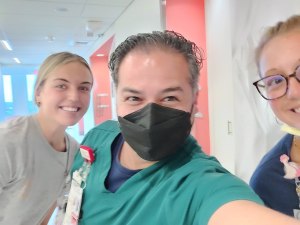
One of the few pictures I took that was not a HIPAA violation
Looking back, I definitely thought about life after being a PCA. I was applying to tenure-track teaching positions, post-docs, jobs back in CA, and other career avenues on my off days. But when I focused on getting better at my job, I could feel how enveloping working at a hospital can be. My whole world was encapsulated in this building. Once I began to realize what that looked like, I started to branch out and learn more about what the hospital has to offer. I met with the hospital chaplain services, who explained their role and goals for patients. I was so fascinated by how well they applied what they studied with their daily roles. The way they talked about that feeling of being there for a patient made me want to enroll in seminary school! I also met with some of the Patient Advocates. People from this department were masters at talking to patients. They solved the problems no one else could- not the medical mystery kind of problems, more like the issues patients were having that medicine couldn’t fix, like working with a difficult healthcare provider, or struggling with the emotional toll of being a patient. The Patient Advocate who worked on our floor was this really cool guy. He gave off this Quarterback-at-the-pep-rally vibe. I sat down and had a chat about the job and what it’s like. After spewing out all of my experience, he told me, “The main part of our job is listening”. When he said that, I knew that was exactly where I wanted to be. It took some courage and the needed introductions, but once I saw a position open in the Patient Experience department, I applied. I got an interview, and, after a lot of storytelling and self-aggrandizement, I got the job! This news catapulted me into a future of working at The James. A whole pathway for a bright and fruitful future was laying out in front of me. This, I felt, was going to be a great fit, and it was going to be exactly where I wanted to be…………………………right?
Grey
I remember my first day at this new gig. No more scrubs, no more drawing blood, no more cleaning up patients who were incontinent. I walked into the Patient Experience office well-dressed, shaved, notebook in hand, ready to change the world. The team was a great group of people to work with. We were this oddball collection of personalities, with everyone bringing their own strengths to the job. I started working in the ICU (intensive care unit). These were some of the sickest patients in the hospital, a lot of them struggling with chronic illness and in the advanced stages of cancer. The person who trained was exactly who this unit calls for- someone tough, but also knows when to offer a hand on the shoulder, someone kind, but also is just as effective in kicking out unruly visitors as our security team. She taught me everything I needed to know, including how to file patient concerns, reaching out to providers on other units, and navigating the language that’s between sympathy and hospital protocol. I had so much to learn here, and I was all for it. I couldn’t wait to bring everything I learned to this position, seeing medical humanities in practice, in real time.
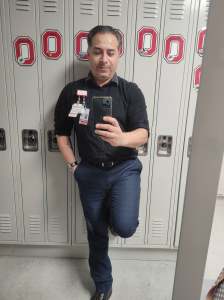
first day mirror selfie, part II
Once my training and observation was done, I was on my own, ready to work. I walked into work every day feeling I was going to change the world, exactly what I was looking for after graduating. On my first day, I visited patients and talked to their families, some intubated, others really worried about their condition. There was a lot hand holding that day. The next day, I did the same thing, with more patients, more hands to hold. The next day, I did that again. The day after that, I did the same thing. And the day after that, also the same. And again. And again. And again. Everything I needed to learn for the job took about two weeks to cover. Soon, I was assigned to my unit, doing the same thing, Monday through Friday. I began to feel the corners of my smile dampen, lower, and soon turn into a grimace. I went to lunch during one shift and overheard two coworkers shared their favorite dad joke. Then it hit me- ohhhhhhh, shit. This is a job. Like, a day job. Like, a 9-to-5, with whacky-tie Thursday day job. This is not an extension of my education. I’m supposed to be a professional here. It was fun meeting new patients and learning new ways to help people. The rush I got learning something new for this job lasted about thirty seconds. Everything else could be done on autopilot. It felt less like learning something new and more about keeping a rhythm going. And I was going to do this job for what I estimated to be….the foreseeable future. I was grateful for the opportunity, but now I was here, questioning this opportunity I worked really hard for. I wait until the weekend to think about how I feel. On autopilot for now.
There was something else that started to bother me. When I got my new position, my schedule was Mon-Fri, 12:00-8:30pm. It sounded great at first- no early mornings, and clocking out early enough to have a nice evening to myself. But after a month, I started to notice a problem- I never saw my friends. Thanks to having friends who were also former and current grad students, they were all on a grad student’s schedule, which meant Happy Hour get-togethers and days where you can just hang out all day and do nothing. I no longer had that life. My schedule was oppressively rigid. I didn’t think this going to bother me so much, until I started noticing something…….my whole life was becoming more and more grey. I had a routine at work, I texted my friends once I’d clocked out, and did fun stuff on the weekends, but so much of my life was soon dictated by work, that everything began losing its color. Some days, I would wake up, spend all morning reading emails, go to work, clock out, only to have a sliver of the day left for me. Going on Nightwalks didn’t do the trick anymore. Walking down the street and bumping into friends was no longer a thing. My favorite restaurants began to close not long after I would clock out. The food in the cafeteria was getting blander and blander. Everything just got more and more grey. And soon, I was getting more grey. I would sit and laugh with my friends and coworkers, surrounded by grey walls, grey carpeting, dim fluorescent lights, then walk home, with grey overcast, with only a few hours left in the day. Time was moving forward, towards a direction with the next forty years spelled out in front of me. I was making more money and had a job hardly anyone on the planet was qualified for. But life itself was slipping away. Is this what having a job was like? Did academia spoil me? I needed more time to think about this. But my patients needed me now. Again, I turned on the autopilot, waiting until the weekend to ask these questions.
Several months into my new job, one of my supervisors asked me to help with a research project. When he explained it to me, my ears soon perked up. I can use my research background for this! It was a project dedicated to helping patients get better sleep in a hospital, which has always been something every hospital struggled with. My job was to collect data and chart it in a way to use it as quantifiable evidence to improve hospital conditions. I studied the info, created a list of questions, and began data collection, turning it into valuable info for our department. I felt needed. I felt enthused. I felt the muscles in my brain that were beginning to atrophy flex and be used for good. Yes, this was where I was needed. My supervisor loved my work, as I collected data that was slowly turning into building blocks for a new solution for an old problem. The charts we put together developed a hue of knowledge that will soon help people. He praised my efforts, putting me in his good graces.
Then…it was over. and everything was grey again. It was a Tuesday when I submitted my last set of data. Back on autopilot.

Homecoming meal
Instead of my usual trip back home during the holidays, I held my breath and saved up enough vacation time for a two-week trip back home to California for the month of March. This allotted the time I needed for myself. Life wasn’t making sense. I had a job my previous life could only dream of, but I wasn’t happy. How is that possible? I needed to feel grounded again. I needed color. I needed to feel something. My first stop back home is In-N-Out, a place I countdown the days between visits. The smells alone from my food bring back the color I’m looking for. Gooey cheese, crisp lettuce, sharp pickles, savory spread, a fluffy bun. One bite, and I’m back home. I know color again.
There’s a vibrancy in the air in Los Angeles. And not from the smog. The first time I went back to California while studying at Ohio State, this question bubbled up inside of me: am I flying back home or leaving home? The years during my program, with exams, girlfriends, life events telling me where to go, finishing my dissertation, Columbus became my homebase. Now, things felt different. If I wanted to, I could and move here permanently. This is the freedom no one tells you about after completing a PhD program. You can go anywhere- you just have to figure it out. I visited my favorite bar during my stay, order a Negroni, and txt my friends that I’m back home. While I was sitting there, I thought about what was in front of me. I work at one of the finest oncology institutions in the country, in a department with a lot of responsibility. It only came at the cost of having friends, my social life, and staying in the city I’ve been meaning to leave since I graduated from my program. The bar I’m at was quiet at that hour, 5pm on a Sunday. It gave me the room to think. Color turns into space. I have the space I finally needed to pause and ask myself what I actually want. I want to do research. I want to change the world. I want to use my brain to make the world a better. I also like not struggling to pay my rent, and working at place I’m proud to work at. And I love my friends. And my family. I have a good support circle. Why does everything feel like they’re all working against each other? I took another sip of Negroni. I’ve always shared an affinity with this drink. It has a robust flavor profile, the kind you can swim in. Yet to make it is three ingredients poured in the exact same proportion. Simple, yet elegant. Soon, a booze-inspired clarity washed over me in waves. I know what I want. I know my potential. I see three doors in front of me: staying in Ohio, moving to California, or moving to a city at a research position, with teaching and writing as my focus. Each option sounded great, but I had to choose. This is where the freedom comes in- I have to walk through one door at one point, but I also want to at least peek through each one before going. Then it hits me- I’ll stay in Ohio another year, apply to academic jobs, and if none of those jobs come through, I’ll move back to California. I’m letting fate decide which door I walk through. It felt like this was the best use of every option, allowing me to make the most of whatever opportunity comes for me.

Santa Barbara Beach

beach colors
With the time I had left on this break, I engulfed myself in color. The first place I thought of- the beach. Blue waters, with crisp air and the feeling of sand under my feet. My brother suggested a road trip to Santa Barbara, along with my mom and my sister, two people who deserve a vacation way more than I did. I was surrounded by stories by the time we got there. My mom, sharing old family stories spurred by a long road trip, and my sister, telling me how many teeth her daughter lost this year so far. We got to the beach, seeing a blue so shiny, you need sunglasses just to look at it. My sister booked us a trip on a landshark- an amphibious bus that can go from land to water. We saw several pods of seals on the pier, reminding me of what aquatic life looks like after living in a landlocked state. When it was time to go back, I took a solo train ride home. There’s something soothing about riding a train when you’re in the midst of an existential crisis. I was moving forward on a solid rail. I felt the movement, but wasn’t sure if I was moving forward. A few days later, I met up with a friend at our favorite sushi place. On my way, I realized we were near Museum Row, where LACMA, the Academy of Arts and Sciences museum, and the Peterson museum meet. I decided to take a quick trip inside LACMA. I had no idea which exhibits were in place. As long as they had art in color, I was happy. I walked inside and got way more than I expected. There was a new Impressionist exhibit on display. I was always drawn to impressionism, the kind of art that can make something so beautiful out of the tiniest and most subtle brushstrokes. Walking down the rows of paintings, I saw a collection of his Water Lilly paintings. I no longer had an urge to check my phone, think about inflation and climate change. I just stopped and watched. I felt my blood pressure lower, my eyes feeling the opposite response to doomscrolling. Maybe this is what I needed: to pause. Hospitals are full of beeps, notifications, alarms, the occasional yelling of a frustrated family member. I was in a sea of calm. When I moved to the next image, I felt how necessary it was to have these moments of pausing. Is this the trick? Learning to pause? I don’t know, but in that moment, I no longer felt the agitation working at a hospital gives you. I embraced the pause, adding it to the toolbelt of skills needed to do well at your job. On my last day in LA, I thought a lot about what I needed to come to peace with, as well as what I wanted. The plane was soon in the air, flying into the grey.

flying into the grey
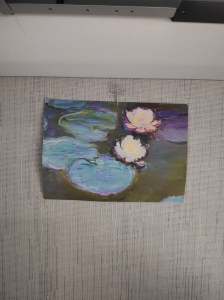
Water Lilly postcard
Back at work, working through the motions. Yes, I decided that I will stick it out for another year, in hopes that time helps quell of these contradictions. I brought a little color to my office, pinning a Water Lilly postcard from the museum near my desk. I worked to make the most of this time. Sure, this ended up becoming a job I was counting days until I leave, but they hired me, which meant I needed to do my best. As soon as I adopted this perspective, I felt something off with each day passing. Now that I had this “decision”, my time here felt more like mortal coil. There’s a clock hanging over me, constantly asking for some truth between the ticks and tocks. I still liked being here, but I began more and more to rely on my autopilot controls. I told myself, Your goal is to get through this, so it’s okay if you feel a struggle.
“Hey Rolando- can you see me in my office?”
My supervisor messages me about an interaction I had with one of my coworkers. Was it that bad? I don’t get it why we’re talking about this. I kept working, kept my head down, continue to chart. The cafeteria was serving-
“Hey Rolando- can you see me in my office?”
Another meeting with my boss. This time, there was an issue with my charting. I thought I was doing it right? How is it possible to-
“Hey Rolando- can you see me in my office?”
I was getting so burned out from these meetings. My patients are happy. And my coworkers love me. I don’t see why-
“Hey Rolando- can you see me in my office?”
Where are all of these mistakes coming from? I thought I was good at this? Didn’t I do well with that research project? I’ll go to one more meeting, but it’ll all be fine, and I can just keep doing my job and be happy, and I’ll be fine………………right?
Green
“We’ve come to the point where your progress is not matching with our expectations” The buzzing I thought was behind floods my ears. Am I…..getting fired? I sat in a room with three people above me as they shared their concerns about my progress, determining my future. My hands gripped the table, ready to flip it over and yell how this unfair this was and that I’m doing a good job here. Then, a warmth wrapped over my shoulder, telling me that it’s okay. One of my supervisors tells me, “We’ve been working with you for the last month, and it feels like we’re trying to fit a square peg through a round hole”. My fight or flight was aiming towards fighting, but the warmth says to me, “It’s okay. It doesn’t feel like it now, but it’s okay”. I worked really hard to get this position, pouring my heart into this job. But when I thought about “my decision” and my work after that, I needed to admit something to myself: they’re right. Not only were they right, but out of some horrible inversion, this is what I wanted. I knew I was going to leave Ohio eventually. Leaving meant I could now head back to California. This just sped up the timeline. One of my supervisors says, “We’d like to offer you the chance to resign. You contributed some really positive things to our department, but this is not working out”. I really wanted to argue, but I couldn’t disagree with them. This is the hard part about honesty. The truth is so real, you feel defeated when you hear it. I walked out, not knowing how else to respond. I went back to my office, dropping off my phone, collecting my things, including the postcard. On my way to the elevator, one of my supervisors was on the other side as the doors opened. Instead of brushing him aside, we had a very pleasant exchange, all things considered. He reminded me of the strengths I brought to the position, suggesting maybe the next step is figuring out where to apply those strengths. I shared with him how much of a pleasure it was working with him. We shook hands, and I left the building. It was pouring rain as I walked home, the grey washing over me.
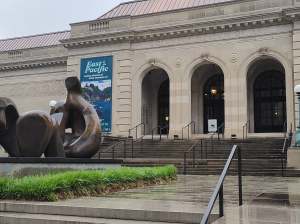
Columbus Museum of Art
The world just kinda slowed down after that. It was the start of the summer, but I didn’t really care. I visited the Columbus Museum of Art that weekend, in search of color. There was a ton of color, but none that connected with me. Even at a museum, I found myself going through the motions. Everything was just noise while I thought about what happens next. I didn’t want to live in a world that didn’t make sense. How is it possible that a job you worked so hard to get ends up not being the thing that makes you happy? Maybe this is why I needed to be at a museum- to navigate the ambiguity. A good job is not a guarantee at happiness. And happiness is not something you fix like a wound. Everything soon felt like a contradiction. I felt like a contradiction. My gut wanted to fight this, to tell them my potential is worth waiting for. But my heart, that warmth that wrapped around my shoulder, wanted me to pause. What would I be fighting for? To keep a job that made it impossible to see my friends, living in a city I didn’t want to live in. I thought about the people I met and patients I helped during my time there. And I realize something I needed to admit to myself: The James is a great place to work at and deserves my best work, and if I wasn’t giving it my best, something needed to change. I left the museum, on my way home, to write my resignation letter.
Monday came. I sent my letter. After that, I was just kinda living with this grey filter in front of me. I bought groceries, I went jogging, I went to Happy Hour for the first time since getting this job with my friends. But everywhere I looked, I still only saw grey. When grey is all you see, you begin to dig deep, left with only the questions you try so hard to avoid. If I don’t belong here, where do I belong? Did I miscalculate something? How is this the end result of an awesome experience? Where can I find routine but avoid monotony? I saw a stray cat while on a Nightwalk. I could feel its fur, feel the vibrations from its purring, but this filter was stuck in my brain. I couldn’t even register what was in front of me. Some mornings, I didn’t wake up and get out of bed, but more like crawled out, while crushed by the hopelessness of a bleak job market. Every time I went for a walk, I heard nothing but doubt, resentment, a little bit of failure. It felt like I had broken glass for breakfast, my stomach getting torn from the inside as the day passed. I needed to rethink a lot of things. Once I realized Nightwalks were no longer working their magic, I knew something needed to change.
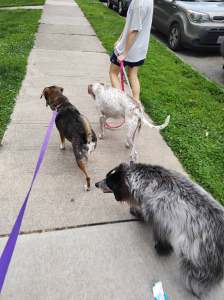
Dogwalking
One morning, I decided to go to the park and read for several hours. Reading in the park was a sanctuary for me. At least, it was during my program. These days, it felt like a chore. It felt like the only reason I was there was to burn time, waiting for the day to end. I started taking pictures of dogs and posting them on my Instagram stories. One of my friends, who lives near the park, told me how much she enjoys taking her dogs there. I suggested taking them soon and that maybe I can join her. Two days later, we walked her dogs, three dogs whose lives were shaped by the smells of our neighborhood. She asked me, “How is your Wednesday going?” It felt like a dam burst open inside of me. I just talked about how much it sucks to find a job, but being happy about moving back to California. It was just one long stream of thoughts I had bottled up. She was kind listener, letting me share what I needed to. Maybe that’s what needed to change. I was looking for my answers inward in a solo venture. Maybe friends were the answer?
Or maybe I need therapy?………nah, friends are better.
I reached out to so many friends. Friends I made during my program, friends who graduated and moved away, my CA friends, and even former coworkers. There was this detangling happening during this period. My insides were soon finding their right places, and I was getting more comfortable with sharing and listening. A couple of friends helped remind me about the healthy wall between my career and who I am. I thought I knew all of these things, and if I had a friend who was in a similar situation, I’d offer the same advice they gave me. But there’s something about sharing that makes it feel more effective. It was warmth in the form of words. One of my friends recommended going out for Informational interviews, where you have a meet with people you’d be interested in working with. I had interviews with academic departments, medical centers, scholars who made great contributions to my field, just about anyone willing to talk to me. And they all felt really productive. They offered advice on where to look for future job postings, and conferences where I can turn my research into future projects. I would feel so optimistic after these interviews, like I still had a chance to make a meaningful contribution. I was applying to jobs again, this time feeling a little more grounded. Instead of casting a huge net, I targeted where I wanted to go, using the vocabulary I picked up to make myself more marketable. My biggest fear was that I was in a position no different than when I just graduated. All of these voices reminded me how much I was no longer that person. I had real world experience academics would love to have. The day after an interview with a very nice professor in Chicago, I asked myself another question: if these interviews are going so well, what am I getting out of them? The people are so kind, but they aren’t guarantees to anything. How are they helping me? These interviews began teaching me that I am not just some guy looking for a new job. I accomplished this amazing degree and want to share it with the world and now need to find the way I can apply it to make the world a better place. I am no longer a student, no longer living without direction. I am a Medical Humanist. And I need to do something good with that.
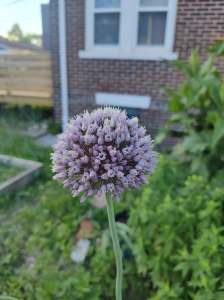
proof that my friend is not The Grim Reaper
The good days came and went, along with the bad ones. The highs ebbed, the lows flowed. I would feel so excited writing a new cover letter, the same day I would get a rejection letter from another job. Finding my equilibrium was hard. It wasn’t until a friend gave me more advice. This friend was also leaving Columbus after graduating from her program. But this wasn’t the warm and friendly advice I was used to getting. This was bone-shattering truth. The kind of truth you hear from the grim reaper. She told me, “You’re not sad because you lost your job. You’re sad because you’re not living. You still live in the apartment you did during grad school. You still go to the RPAC and study at the library like a grad student. But you’re not a grad student anymore. You need to start living”. The armor I wore to get me through this period disintegrated as she told me this. She was so right. The answer was right in front of me, but I couldn’t see it. I needed this lesson in the form of a rhetorical shovel to the face. We were hanging out at a community garden when she shared this with me. I looked behind her to see just to see if she was leaving a trail of dead flowers behind. Nope. She’s just way smarter than me.
I had to start living. I now had a new mantra. It needed to serve me until at least the end of my time in Columbus. After hearing that advice, I started to realize how much I missed out on while living here. I’ve never been to Cincinnati, or Clevland, or to a Buckeye Football game. So much of my time was spent working or studying. Sure, there were Happy Hours and get-togethers, but I needed something big. Something that is both grounding and uplifting. Something not designed for students. I knew I needed color, and I know I like bodies of water. I joined my friend for another dog walk and she asked, “Have you been to Hocking Hills?” I’ve heard of Hocking Hills. I love hiking, and I knew it was far. It sounded perfect. One Saturday, a crew of us hit the road at 5:30am. We made a pit stop to pick up snacks, bottles of water, a couple of beers in case we find
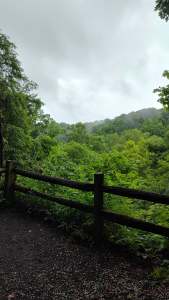
Drinking Spot
a small spot for day drinking. One of our crew members, an Ohio Native, served as our guide. It’s not often I’m comfortable not leading. Maybe this was part of the whole “living” thing. We started walking, and soon our walk turned into a hike. Uneven grounds, the sounds of water flowing off of hills, bird songs. This was the instability I needed. Every predisposition, every attitude, every commute to work that reminded me I needed to be somewhere else was hushed the further we went in. There’s a lush to the green you can smell. It fills your lungs with the thousands of years it took these valleys to shape. There’s life in the air. With every turn, we asked the questions spawned by our intrusive thoughts. Where’s the best place to hide a dead body here? Who is your celebrity hall pass? Are we doing what we want to do with our lives? The mist from the overcast connected me to everything. To campus, to The James, to California, to my friends, to meaning. I was growing the way I needed to. All it took was a hike with a few friends. We soon found that one spot, cracking open a couple of beers, the mist becoming the perfect chaser. Before our hearts opened further, that mist turned into rainfall. We hiked back to the car, but by the time we got back, we were drenched. The rain fell hard on our shoulders. We got back, socks and clothes drenched, hair tussled. Ohio didn’t want me to leave just yet. I felt more alive under this rain than most of the days I lived in Columbus. I didn’t want our hike to end, but it did. It was time to go home.
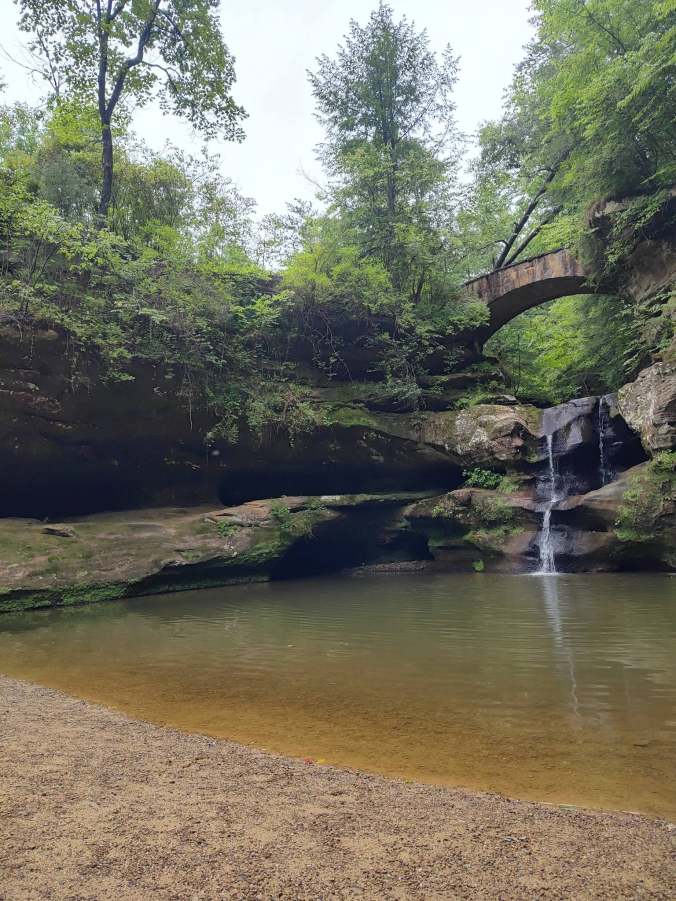
Hocking Hills pic
About a week after our hike, it was time to start packing. I needed to pack, get rid of furniture, sell and make as much extra sccratch as possible, and say goodbye to Ohio. My friends took me to lovely dinners, more Happy Hour get-togethers, and walks down Neil Avenue. I got a ton of boxes from U-Haul to ship my stuff back home. With every box, I ended up boxing more than jeans and shoes. I was putting the life I was living, or not living, in these boxes, finding extra seconds to reflect each time I wrapped them up with tape. There were my fleece-lined jeans, one of the first purchases that taught me how living in Ohio includes some of the harshest winters this LA-native has ever known. There was the small framed map of Los Angeles a friend back home got me to make sure I don’t forget where I came from. There was a jacket I bought to impress a girl in my Victorian Literature class. I was packing memories, songs, smells, colors, moments that could not have come to exist if it wasn’t for pursing this academic career. Each item has their own story. One of the last items I packed was a video a friend of mine recorded of me. (I packed it figuratively- I’m having a moment here) This friend graduated from OSU years ago and moved to Kentucky for a teaching position. Years ago, when this friend was still living in Ohio, a bunch of us were hanging out at her apartment, drinking while sharing life stories. She recorded my part. I talked about my own superhero-esque origin story. I watched it over and over, hearing the words of first-year Rolando talk about how he got to where he is. It was a fitting video, harmoniously in tune with New Slang by The Shins playing in the background, paying homage to the movie Garden State, a movie that played a significant role in my artistic upbringing. The last thing I packed was a goal I set for myself. I needed to make sure I live a life Freshman Rolando will be proud of. I didn’t like how my tenure at The James ended, but I came to grips with the reality that it came to an end. OSU was where I got my PhD, and The James served as my unofficial post-doc, offering real world lessons and real faces to my research. It was lovely, hard, successful, scary, necessary, and crash. All at once. And it finally came to a close. I slept on a futon I was trying to sell. Someone was planning on picking it up two days after my move. I have no idea if it was ever picked up or not. I had to be okay with that.
The day finally came. My apartment was empty. My boxes shipped. My flight on schedule. I woke up, ready for that last flight. I turned on my Pandora, the one music app that somehow always knows the song I need. It plays I Know by Swapmeet. I never heard of this band before that morning. The opening guitar held a beat matching my heartbeat. Stringy and harsh guitar notes paired with an angelic voice. I know/I know/I know/I know/I know/I know/I know/I know I’m not right. I start air-guitaring, something I haven’t done since…possibly before moving to Ohio. The strums are running through me, like my hands always knew this song. I am both grounded and transcending. A contradiction that has affectionately shaped this period. I was about to leave Ohio for good, contradictions and all. I spent the last two years making the most out of my post-PhD life. Now, I needed to just live. My phone soon pinged with a notification. Did I get that job? Were my friends getting together for a Group Facetime to wish Bon Voyage? Nope. My Lyft ride pulled up. The driver drove down Neil Ave., seeing the street shrink as I see it for potentially the last time. The closer we got to the airport, the more I began to question my whole time here. Was this all real? All of these life events felt like they could be compressed down to fit on a teaspoon. What is life going to look like once I’m back in LA? Will I go back to teaching? Will I stay in healthcare? Will I still have Movie Nights with my friends? What about Porch Drinks? Friday Night Hangs? Tango Night? Bouldering? Nightwalks? My new life was in that sweet spot, on the verge of blossoming, inchoate. I sat near my gate, watching all of the people seek their next destination. I’m sondering, wondering if any of these people know the direction they were about to fly to. Maybe they don’t. And maybe it’s okay that they don’t have all the answers. We’re all trying to figure out what that next place is. The planes above me were flying in a million different directions. I had no idea what life will look like after I land. The possibilities are infinite.
And I’m……gonna be fine.
Acknowledgements: I wish to share two dedications for this post.
The first is to Paul Auster, American writer who wrote some of my favorite novels. I’ve had the pleasure of hearing him speak about his latest book, as well as meeting him. He signed my copy of Moon Palace. That novel and his writing played a significant role in this blog post, as his works were mentioned multiple time. (see Perfect Timing and Negroni) I mention this now to also acknowledge a macabre connection to this post. Auster passed away the night before my dissertation defense. I felt that the next day was so important, that I didn’t have the bandwidth to mourn appropriately. I hope this post pays homage to my passion for writing, as well as his works, who inspired me to write in the first place.
If I could give you the words you need to hear, it’d be a great victory– from Paul Auster’s City of Glass
The next dedication is to all the healthcare workers I’ve had the privilege working alongside with. As someone with a degree in Literature, working in clinical settings felt like I was playing dress up and pretending to be a part of this team. The workers soon began welcoming me into their world, encouraging me to continue my pursuit to help others. I grew so much within this period. I could not have done so without the warmth and care they showed me. From helping nurses boost patients to marching alongside them as they fought for better compensation, they made me feel like I was a part of their efforts. It was a period I will always cherish. I hope my work continues to acknowledge their efforts.


